O-LevelChemistryRates of Reaction5070/12 · May/June 2021 · Q181 Mark
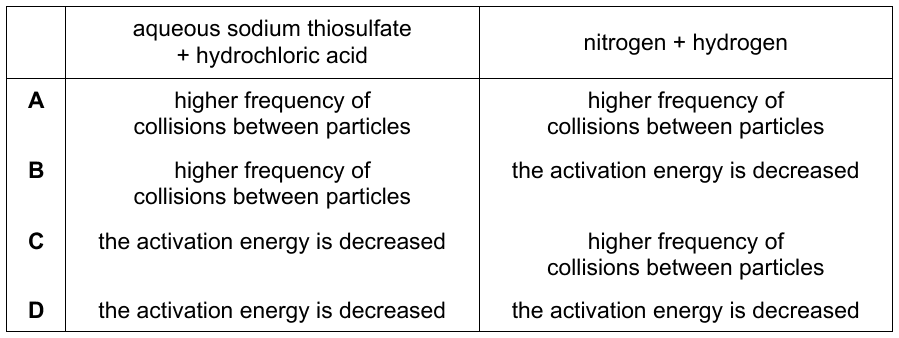
Aqueous sodium thiosulfate reacts with hydrochloric acid. The rate of the reaction increases if the concentration of both reactants is increased. Nitrogen gas reacts with hydrogen gas. The rate of the reaction increases if the pressure in the reaction vessel is increased. Which row correctly explains why the given change increases the rate of the reaction?
This question uses a diagram from the original paper, which isn't shown here. Open the full paper from the past papers archive to see it.
Aaqueous sodium thiosulfate + hydrochloric acid: higher frequency of collisions between particles, nitrogen + hydrogen: higher frequency of collisions between particles
Baqueous sodium thiosulfate + hydrochloric acid: higher frequency of collisions between particles, nitrogen + hydrogen: the activation energy is decreased
Caqueous sodium thiosulfate + hydrochloric acid: the activation energy is decreased, nitrogen + hydrogen: higher frequency of collisions between particles
Daqueous sodium thiosulfate + hydrochloric acid: the activation energy is decreased, nitrogen + hydrogen: the activation energy is decreased
✓ Correct answer
A: aqueous sodium thiosulfate + hydrochloric acid: higher frequency of collisions between particles, nitrogen + hydrogen: higher frequency of collisions between particles
Practise more questions on this topic
Oracle Prep sorts past-paper questions by topic, so you can drill Rates of Reaction and see which topics are most likely to come up next.
Sign up free →