O-LevelChemistryElectrolysis5070/12 · Oct/Nov 2022 · Q171 Mark
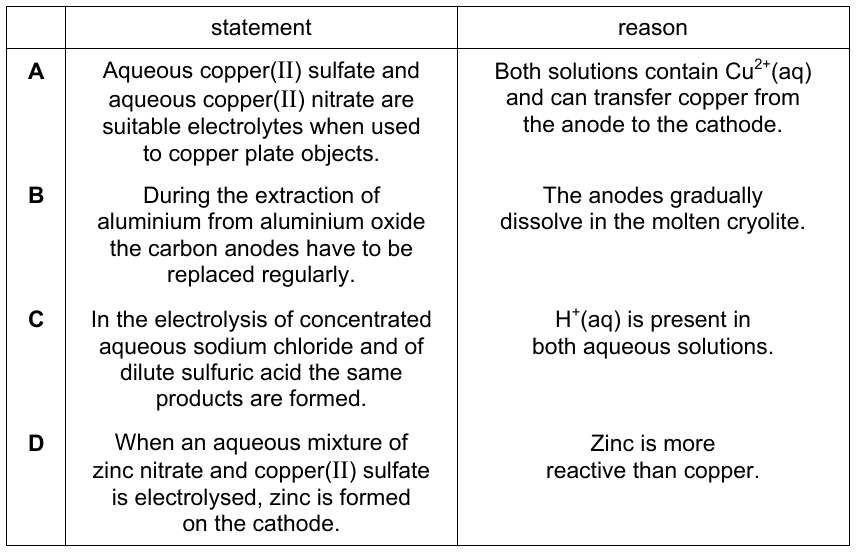
The table gives some statements about electrolysis and the reason why each statement is true. Which row shows a correct statement and the correct reason why the statement is true?
This question uses a diagram from the original paper, which isn't shown here. Open the full paper from the past papers archive to see it.
AAqueous copper(II) sulfate and aqueous copper(II) nitrate are suitable electrolytes when used to copper plate objects. Both solutions contain Cu²⁺(aq) and can transfer copper from the anode to the cathode.
BDuring the extraction of aluminium from aluminium oxide the carbon anodes have to be replaced regularly. The anodes gradually dissolve in the molten cryolite.
CIn the electrolysis of concentrated aqueous sodium chloride and of dilute sulfuric acid the same products are formed. H⁺(aq) is present in both aqueous solutions.
DWhen an aqueous mixture of zinc nitrate and copper(II) sulfate is electrolysed, zinc is formed on the cathode. Zinc is more reactive than copper.
✓ Correct answer
A: Aqueous copper(II) sulfate and aqueous copper(II) nitrate are suitable electrolytes when used to copper plate objects. Both solutions contain Cu²⁺(aq) and can transfer copper from the anode to the cathode.
Practise more questions on this topic
Oracle Prep sorts past-paper questions by topic, so you can drill Electrolysis and see which topics are most likely to come up next.
Sign up free →